First Impressions
Dallas is a city built around movement. First came trails and trading routes. Then railroads. Then highways. Then airports. Today, Dallas–Fort Worth is one of America's major transportation and business hubs.
If you landed at DFW International Airport, you arrived at one of the largest airports in the world. It sits between Dallas and Fort Worth and functions almost like a city of its own.
If you landed at Dallas Love Field, you arrived at the older airport closer to downtown Dallas. Love Field is closely associated with Southwest Airlines and also has a place in American history: President John F. Kennedy landed there on the morning of November 22, 1963, before his motorcade entered downtown Dallas.
Either airport tells part of the Dallas story. This region grew because people, goods, money, and ideas could move through it quickly.
Dallas is part of a much larger area called Dallas–Fort Worth, often shortened to DFW or called the Metroplex by locals. It includes Dallas, Fort Worth, Arlington, Irving, Plano, Frisco, Grapevine, and many other cities. Dallas is the business, finance, arts, and urban center. Fort Worth has the stronger western identity. Arlington, between them, is home to major sports venues.
How Dallas Began
Dallas began in the 1840s with a trader named John Neely Bryan, who established a small trading post near the Trinity River. At that time, this was frontier territory. Texas itself was still young — before joining the United States, Texas had been part of Spanish territory, then Mexican territory, and then the independent Republic of Texas.
That history still shapes the state's personality. Texans are proud Americans, but they also like to remind you that Texas was once its own country.
Dallas grew slowly at first. The major turning point came in the 1870s, when the railroads arrived. Rail connections helped turn Dallas into a regional center for cotton, banking, trade, insurance, and retail.
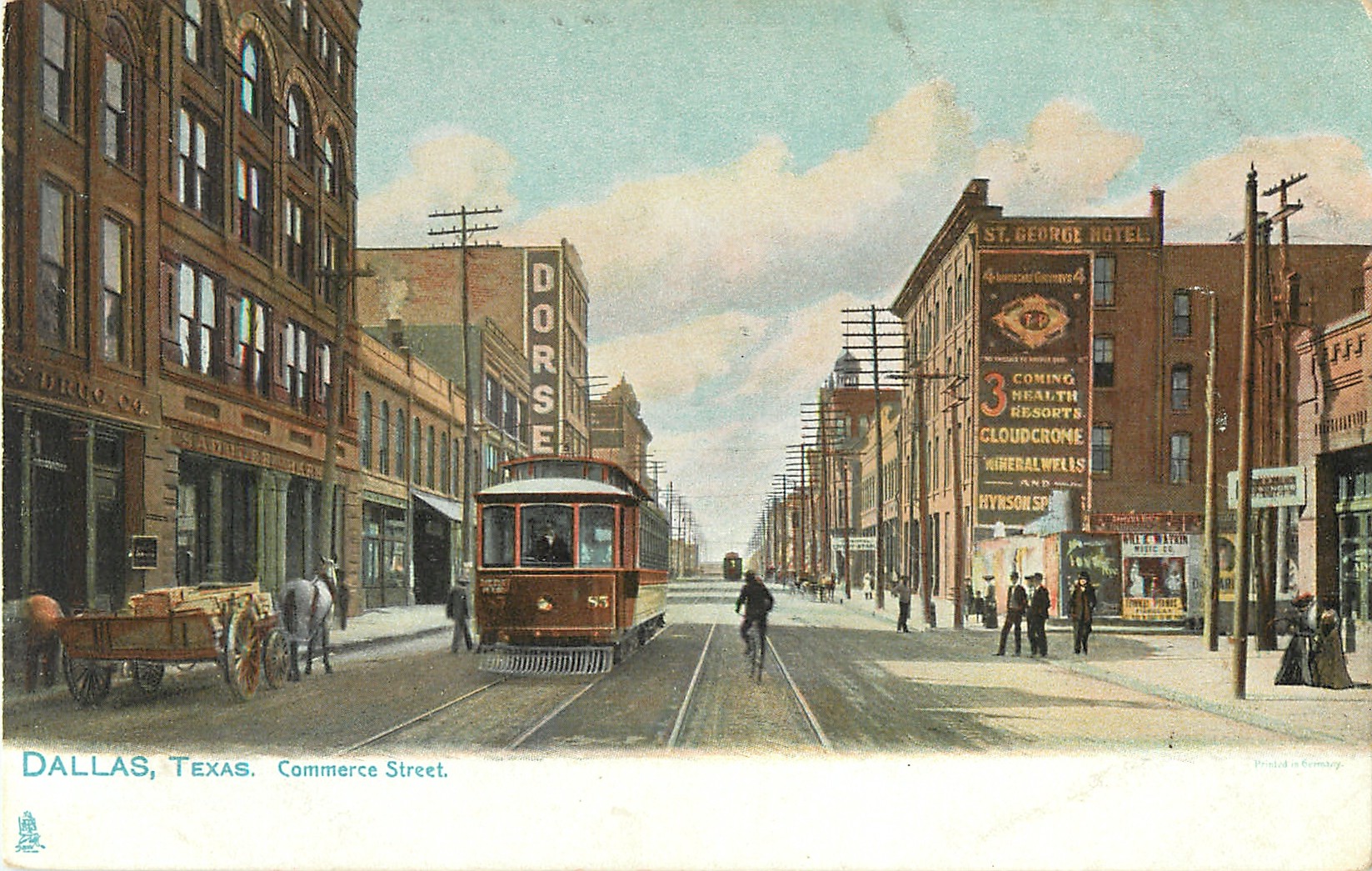
Dallas, Texas · Commerce Street · c. 1900 · Early streetcar era
A Business City
Dallas has always liked commerce. It is a city of deals, ambition, reinvention, and growth. People come here to build companies, start over, make connections, buy homes, change careers, and look for opportunity. Dallas does not spend much time looking backward. It is usually asking what comes next.
It can also make Dallas feel constantly unfinished. Roads are under construction. New buildings go up. Old warehouses become restaurants. Neighborhoods change. Companies move in. People arrive from all over the country and the world. Dallas is always remaking itself.
One thing you'll notice quickly: Dallas is spread out. This is not a compact city where most of life happens around one central square. Dallas grew with highways, suburbs, office parks, shopping districts, and large residential neighborhoods. In Dallas, it is always better to check drive time, not just distance.
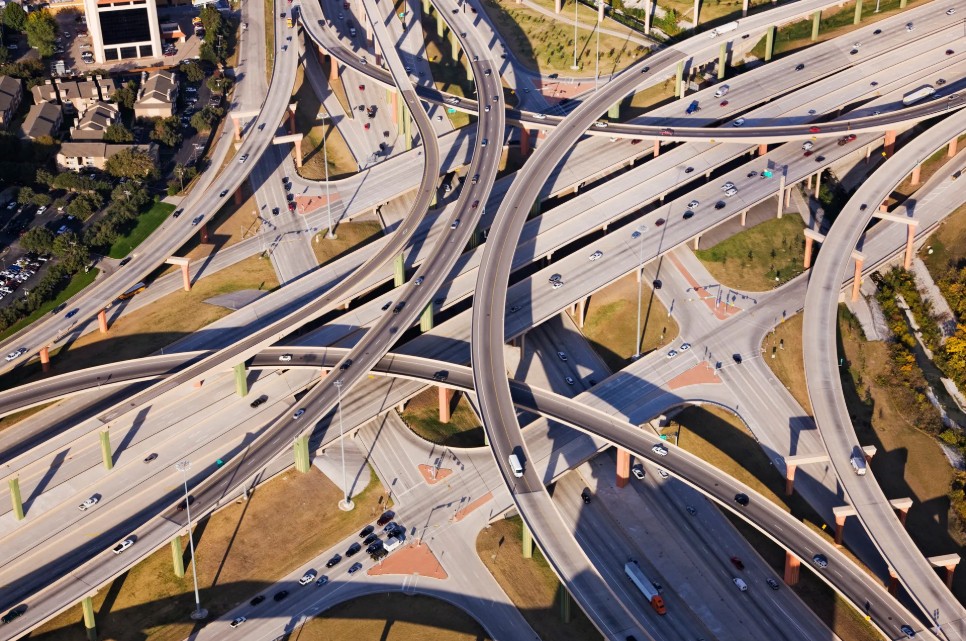
The Dallas freeway system · Check drive time, not just distance
Oil, Money, and the Dallas Skyline
Oil helped shape the image of Dallas, even though Dallas itself was not the main oil field. As Texas oil wealth grew in the 20th century, Dallas became a center for banking, law, insurance, investment, and corporate offices connected to the energy business.
That image became famous around the world because of the television show Dallas — with J.R. Ewing, oil wealth, family drama, power, betrayal, and big personalities. Real Dallas is more complicated than the television version, but the show captured something true: Dallas likes ambition. It likes scale. It likes success. It likes presentation.
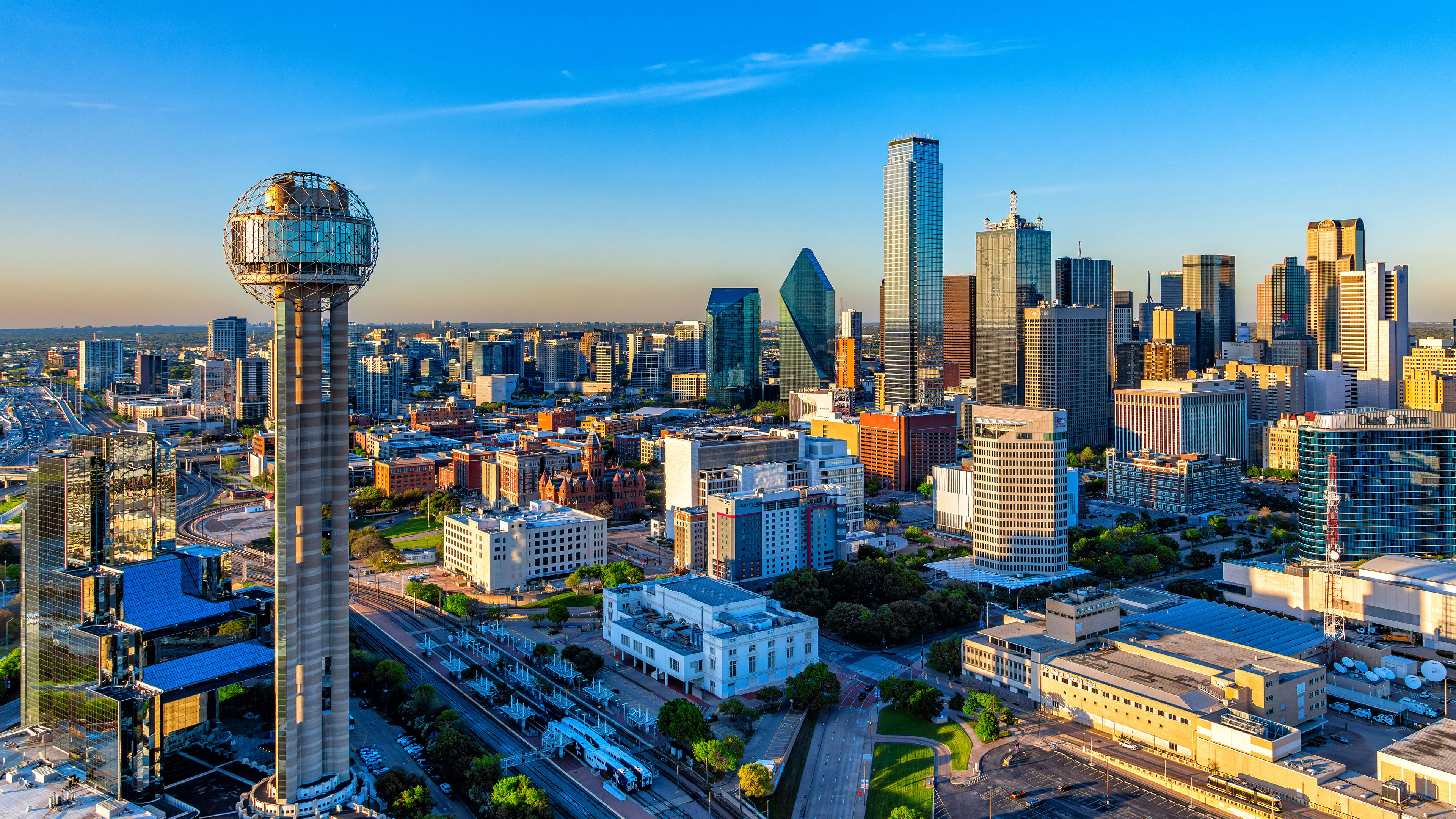
The skyline is modern, colorful, and especially striking at night. One of the city's most famous symbols is the red Pegasus, the flying horse from Greek mythology. In Dallas, Pegasus became associated with Magnolia Oil, later connected to Mobil. It is a very Dallas symbol: part mythology, part oil business, part neon sign.
Another familiar landmark is Reunion Tower, the round ball-shaped tower near downtown. Locals sometimes simply call it "the ball." From its observation deck, you can see just how wide and spread out the region really is.
Dealey Plaza and JFK
No introduction to Dallas can avoid November 22, 1963. That was the day President John F. Kennedy was assassinated in Dallas.
Kennedy landed at Love Field with First Lady Jacqueline Kennedy. His motorcade traveled through the city and entered Dealey Plaza. Shots were fired as the car passed the Texas School Book Depository. Kennedy was taken to Parkland Hospital, where he was pronounced dead.
The assassination changed Dallas forever. For many visitors around the world, Dealey Plaza is the first Dallas site they know by name. The former Texas School Book Depository is now home to The Sixth Floor Museum, which tells the story of Kennedy's life, presidency, assassination, and legacy.
People are often surprised by Dealey Plaza. It feels smaller and more ordinary in person than it does in photographs and documentaries. That is one of the strange things about history: world-changing events sometimes happen in ordinary-looking places.
Dallas has spent decades learning how to carry that history. A mature city has to tell the difficult parts of its story honestly.
Walk the sites of November 22, 1963
30-minute and extended guided tours with archaeologist & historian John Carlton
View JFK Tours →More Than One Story — The Arts District
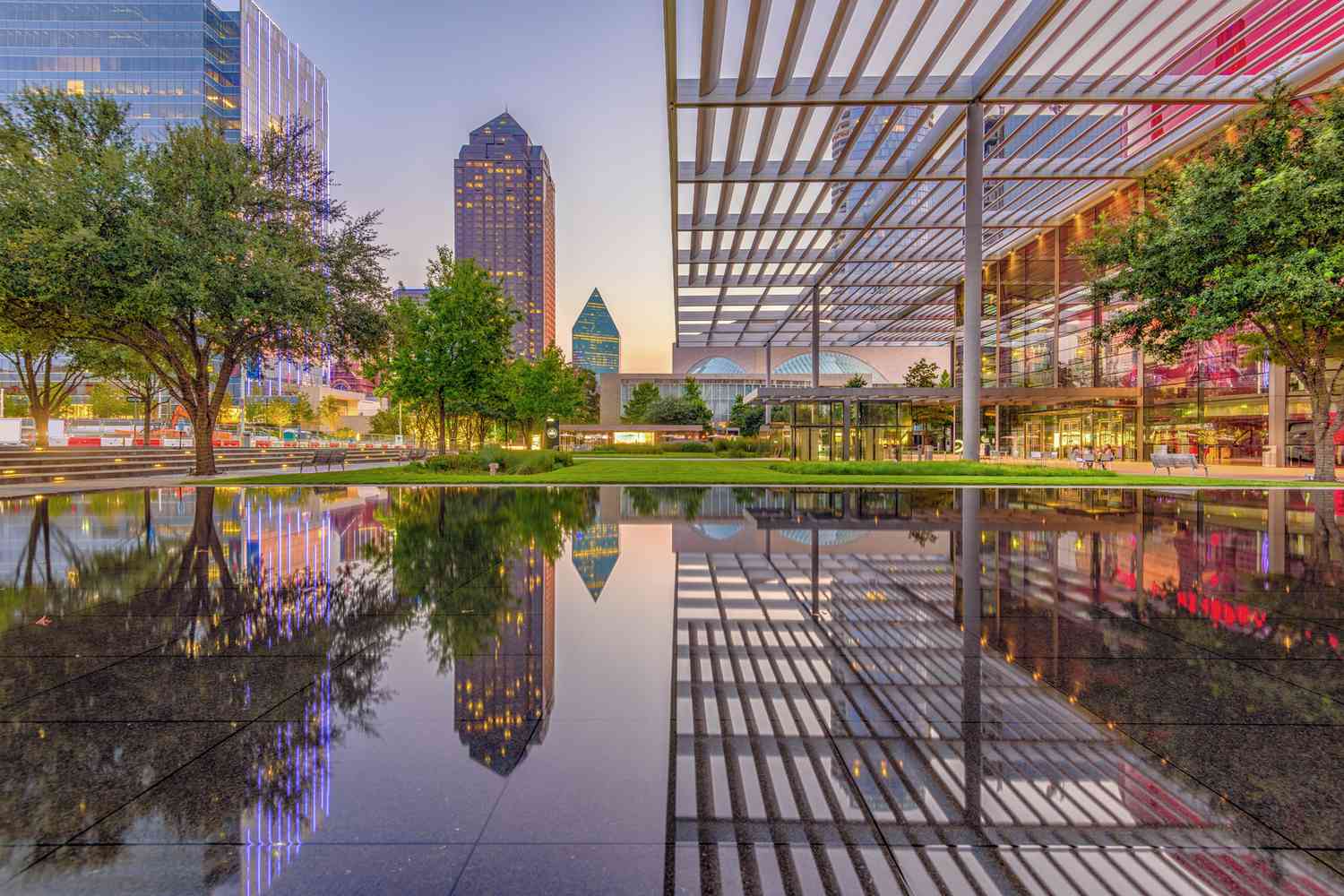
Dallas is not only Dealey Plaza. It is also a city of business, art, sports, food, immigration, architecture, neighborhoods, and constant change.
One of the best examples of the city's cultural ambition is the Dallas Arts District. The Arts District includes the Dallas Museum of Art, the Nasher Sculpture Center, the Meyerson Symphony Center, the Winspear Opera House, and several other major cultural institutions.
The Meyerson Symphony Center was designed by I. M. Pei, one of the great architects of the 20th century. The Winspear Opera House is known for its bold red glass design. The Nasher Sculpture Center is one of the city's great spaces for modern and contemporary sculpture.
This is Dallas saying: "We are not only a business city. We are a cultural city too."
Compared with many world cities, Dallas is young. It does not have Roman ruins, medieval cathedrals, ancient city walls, or royal palaces. Its history is newer, faster, and more commercial. So Dallas creates tradition in other ways: through museums, sports teams, restaurants, neighborhoods, public art, universities, philanthropy, and major events.
Philanthropy is especially important here. Many wealthy Dallas families and business leaders have funded museums, hospitals, parks, schools, and cultural institutions. In older cities, kings, churches, or aristocrats often built the great monuments. In Dallas, businesspeople and donors built many of them.
Food in Dallas
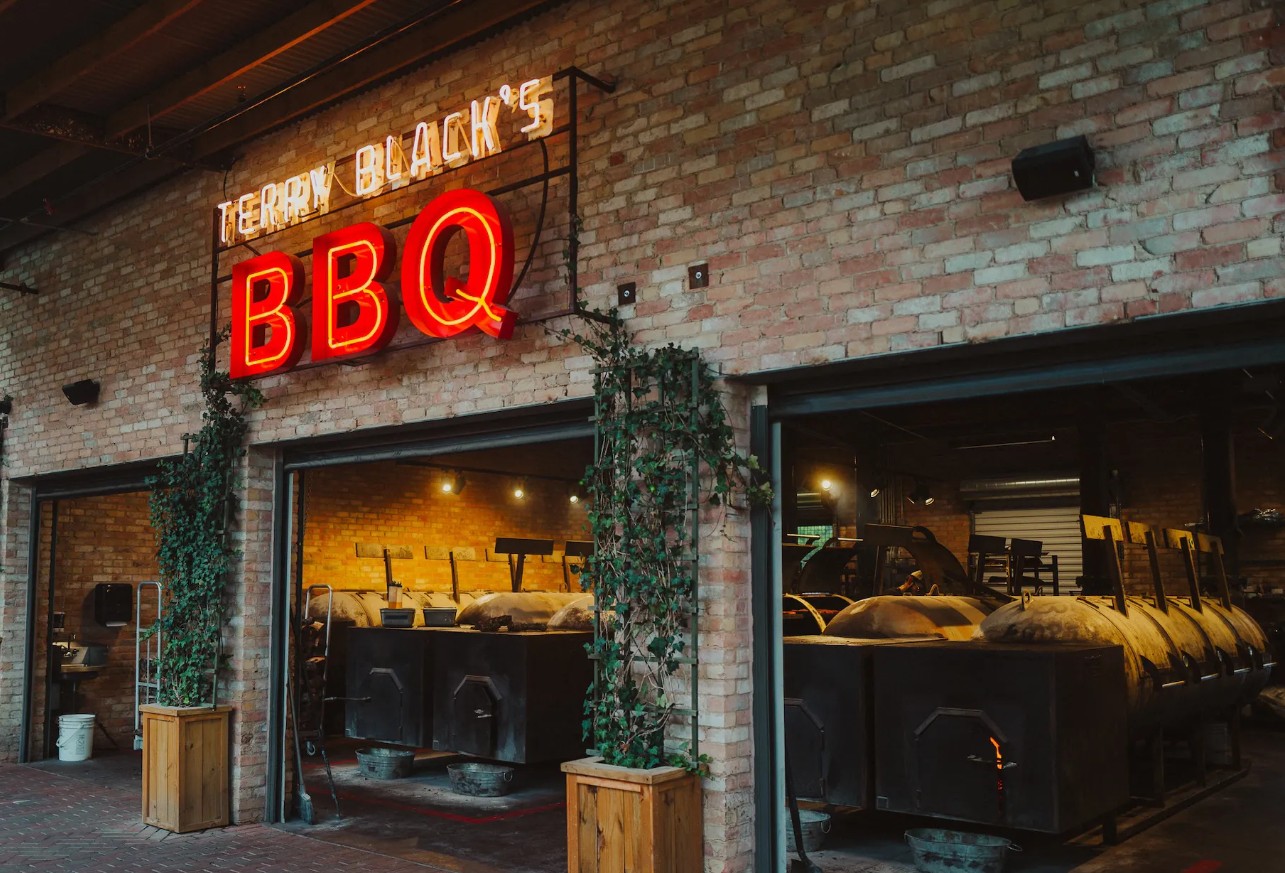
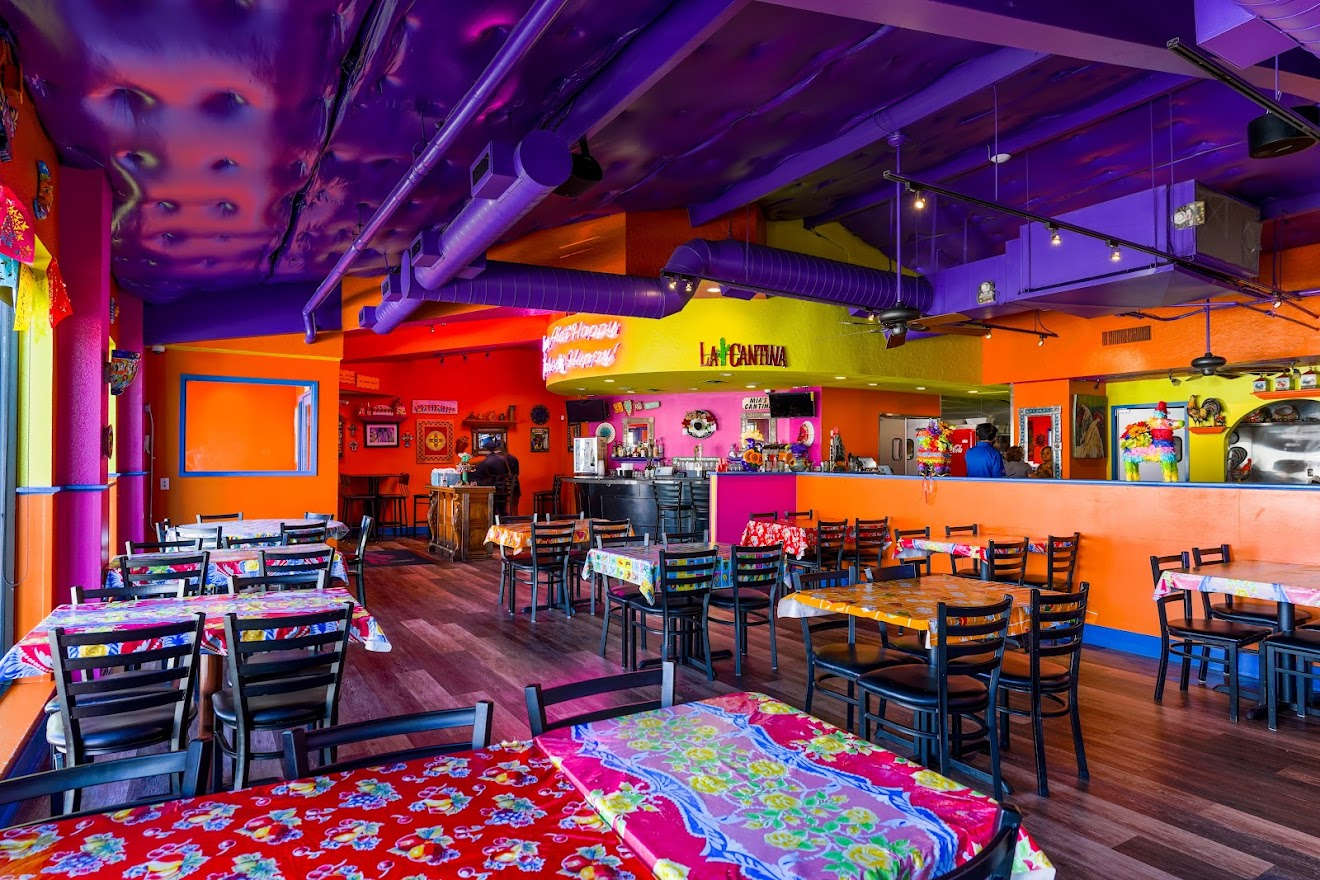 Terry Black's BBQ · Tex-Mex · Dallas food culture
Food is one of the best ways to understand the city. Dallas is famous for barbecue, especially smoked brisket. Good Texas brisket is cooked slowly, often over wood, until it becomes tender, smoky, and rich.
Dallas is also a great city for Tex-Mex. Tex-Mex is not exactly Mexican food, and it is not trying to be. It is its own regional cuisine: enchiladas, fajitas, queso, tacos, rice, beans, salsa, and margaritas.
Steakhouses are also part of the Dallas business culture. A steak dinner here is often where deals are made, clients are entertained, and celebrations happen.
But Dallas food is much more diverse than the old stereotypes. The region has excellent Vietnamese, Korean, Indian, Ethiopian, Japanese, Mediterranean, Mexican regional, Italian, and modern American food. The city has become international, and the food scene reflects that.
Neighborhoods to Know
If you have free time, these are some areas worth knowing:
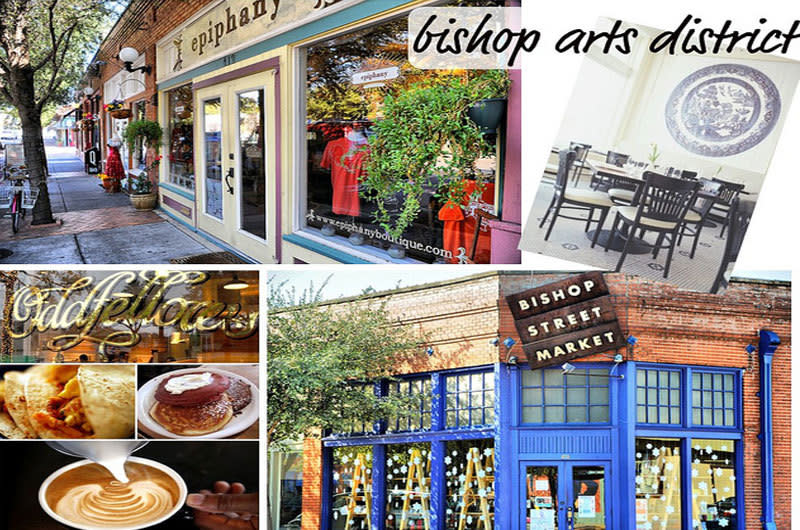
Bishop Arts District · Oak Cliff, Dallas
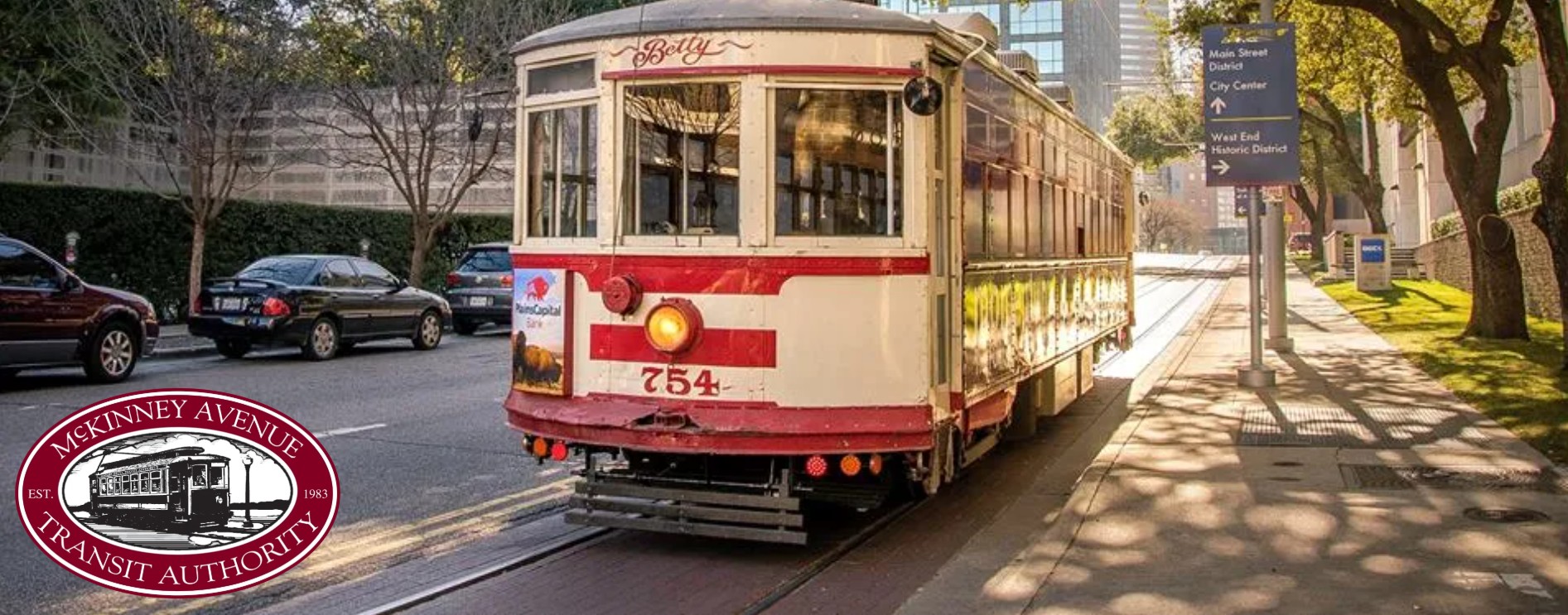
McKinney Avenue Trolley · Free vintage streetcar · Uptown Dallas
Sports
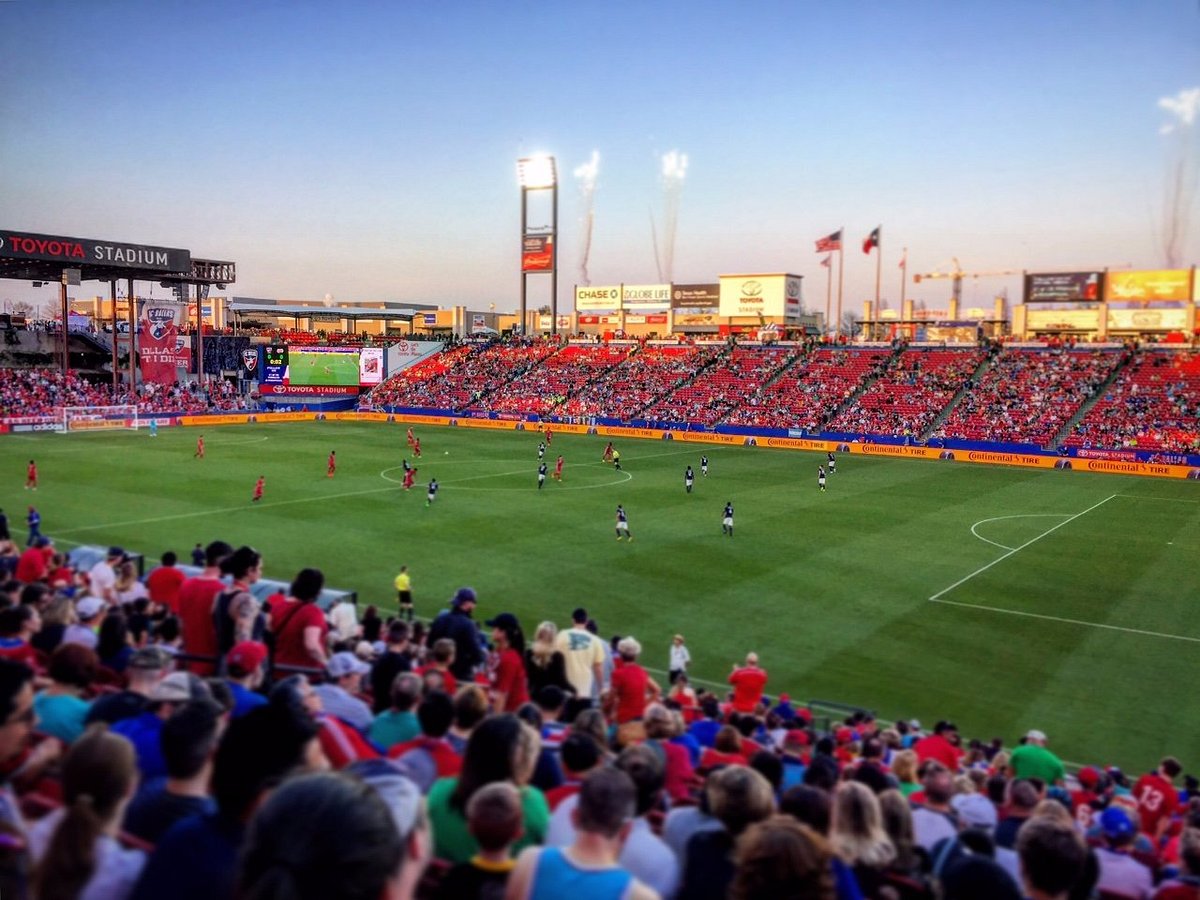
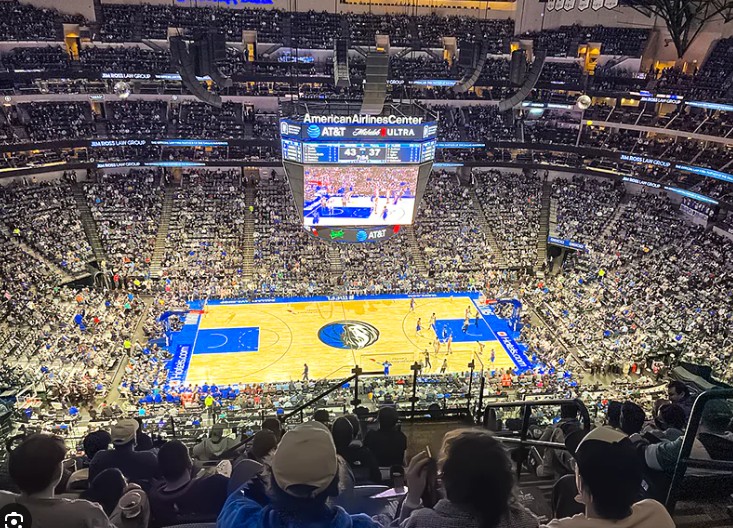 FC Dallas · Dallas Mavericks · Toyota Stadium · American Airlines Center
Dallas is a major sports region. The Dallas Cowboys are the biggest name, even though they actually play in Arlington. AT&T Stadium is enormous — more than a football stadium, it is a full entertainment spectacle.
The Dallas Mavericks are the NBA team, known globally for stars like Dirk Nowitzki and Luka Dončić. The Dallas Stars are the hockey team, which surprises some visitors — yes, Texas has hockey. The Texas Rangers are the baseball team, also based in Arlington. And the professional soccer club is FC Dallas, based in Frisco.
Sports are a major part of the region's identity. Dallas knows how to host big events, and it likes doing things on a large scale.
A Few Visitor Tips
- Dallas is friendly, but it is spread out. Check drive times before making plans.
- In summer, the heat is serious. Drink water and pace yourself.
- Try barbecue and Tex-Mex while you're here.
- Do not judge Dallas only from the highway. The city gets more interesting when you enter its neighborhoods.
- If you have time, visit Fort Worth as well. It gives you the western side of the region.
- And if someone mentions local soccer: FC Dallas, not Dallas FC.
Dallas, Fort Worth, and Arlington
If you want a quick way to understand the region: Dallas is business, finance, arts, skyline, restaurants, and corporate energy. Fort Worth is western heritage, cattle drives, rodeo, museums, and a slower pace. Arlington is stadiums, sports, concerts, and major events.
Together, they form one of the most important metropolitan regions in the United States.
Book a Guided Walking Tour
Downtown Dallas · JFK History · Oak Cliff · Guided by John Carlton
See All Tours →